

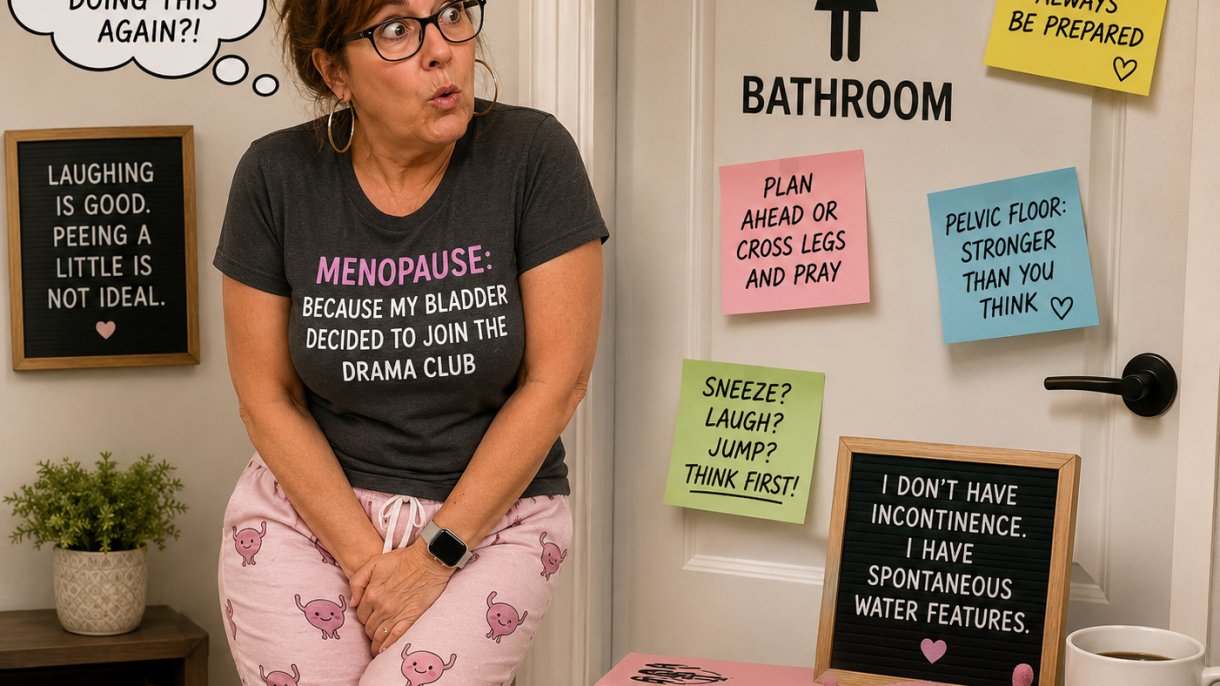

There are many things no one fully prepares you for in menopause. The hot flashes? You’ve heard about those. The sleep issues? Sure. Mood swings? Absolutely. But incontinence, the unexpected plot twist where your bladder develops a personality of its own, tends to arrive with far less warning and far fewer jokes. Which is ironic, because sometimes it literally shows up when you laugh.
Let’s just say it: if you’ve ever crossed your legs mid-sneeze, mapped out bathroom locations like a survival strategy, or approached a trampoline with the caution of someone diffusing a bomb, you are not alone.
During menopause, declining estrogen levels affect more than reproductive health. Estrogen helps maintain the strength and elasticity of the tissues in the pelvic floor and urinary tract. As levels drop, those tissues can become thinner and less supportive. The result? A bladder that is a little less cooperative and a lot more… expressive.
There are a few common types of incontinence that tend to make appearances. Stress incontinence is the one that shows up during physical activity laughing, coughing, sneezing, exercising, or, for some women, simply standing up too quickly like you’re trying to beat a game show timer. Urge incontinence is a bit more dramatic. It’s the sudden, intense need to go right now, often with very little negotiation time. Think of it as your bladder sending an urgent memo marked “high priority” with no option to reschedule.
And then there’s the classic scenario: you just went to the bathroom, you feel confident, you begin a task and suddenly your bladder says, “Actually, I’ve changed my mind.”
While all of this can feel embarrassing, it is incredibly common. The important shift is moving from quietly coping to actively managing, preferably without giving up your sense of humor.
First, let’s talk strategy. Pelvic floor exercises, commonly known as Kegels, are foundational. They strengthen the muscles that support the bladder and can significantly improve control over time. If you’re unsure whether you’re doing them correctly, pelvic floor physical therapy is an excellent (and underutilized) resource. Yes, it’s a real specialty, and no, you are not the most unusual case they’ve ever seen.
Lifestyle adjustments can also make a difference. Reducing bladder irritants like caffeine, alcohol, and carbonated drinks may help decrease urgency and frequency. Staying hydrated is still important cutting fluids too much can worsen symptoms by irritating the bladder further.
Then there are practical supports. Let’s normalize protective liners and products as tools, not defeats. Think of them as backup singers quietly doing their job so you can stay center stage.
For some women, medical treatments are appropriate. These can range from prescription medications to minimally invasive procedures, depending on the severity and type of incontinence. A healthcare provider can help tailor options based on your symptoms and overall health.
Most importantly, give yourself some grace. Your body is adapting to significant hormonal changes, and occasional unpredictability does not define you. It just means you may need to laugh a little differently, perhaps with slightly better planning.
Menopause may bring a few unexpected moments, but with the right approach, support, and a well-timed bathroom break, you can absolutely stay in control… most of the time.