

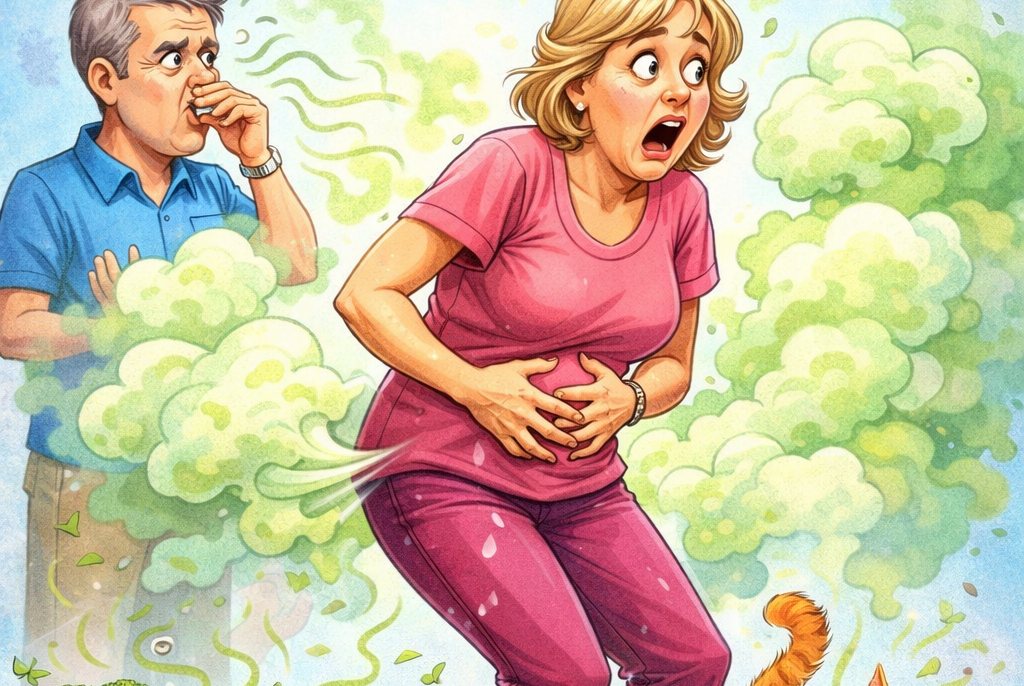

If menopause has brought unexpected bloating, gas, or flatulence that seems to appear out of nowhere and linger far longer than it should you’re not imagining things. Digestive changes are a common but rarely discussed symptom of menopause, and for many women, gas becomes an uncomfortable new normal.
The good news? There are clear reasons for why this happens, and there are effective ways to manage it.
Why Menopause Can Increase Gas
Hormonal shifts, particularly declining estrogen and progesterone, play a significant role in digestion. Progesterone helps relax smooth muscle in the gastrointestinal tract. As levels fluctuate and decline during menopause, digestion can slow or become less coordinated, leading to gas buildup and bloating.
Estrogen also influences gut bacteria. Changes in estrogen levels can alter the balance of the gut microbiome, increasing gas production. On top of that, menopause is often accompanied by increased stress, sleep disruption, and changes in eating patterns, all of which affect digestion.
Other contributing factors include:
- Slower intestinal transit time
- Increased food sensitivity (especially to dairy, gluten, or high-FODMAP foods)
- Reduced physical activity
- Weight redistribution around the abdomen, increasing pressure on the digestive system
Common Symptoms
Menopausal gas can present as:
- Excessive flatulence
- Abdominal bloating or pressure
- Cramping or discomfort
- Feeling full quickly after eating
- Loud or frequent digestive noises
While these symptoms are usually benign, persistent or severe digestive issues should always be evaluated to rule out other conditions.
Treatment and Management Options
1. Adjust Your Diet
Certain foods are more likely to cause gas, especially during menopause. Common triggers include beans, cruciferous vegetables, onions, carbonated beverages, artificial sweeteners, and dairy. Keeping a food and symptom diary can help identify personal triggers.
Eating slowly, chewing thoroughly, and avoiding large meals can also reduce swallowed air and gas buildup.
2. Support Gut Health
Probiotics may help rebalance gut bacteria and reduce gas in some women. Look for strains such as Lactobacillus and Bifidobacterium. Increasing dietary fiber gradually not suddenly can also improve digestion.
3. Stay Physically Active
Regular movement stimulates intestinal motility. Walking after meals, gentle yoga, or stretching can help gas move through the digestive tract more comfortably.
4. Manage Stress
The gut and nervous system are closely connected. Chronic stress can worsen bloating and gas. Mindfulness practices, deep breathing, adequate sleep, and stress-reduction techniques can significantly improve digestive symptoms.
5. Over-the-Counter Relief
Products containing simethicone can help break up gas bubbles, while digestive enzymes may assist with specific food intolerances. These can be useful for occasional relief.
6. Hormonal Considerations
For some women, hormone therapy may indirectly improve digestive symptoms by stabilizing hormonal fluctuations. This should be discussed individually with a healthcare provider.
When to See a Healthcare Provider
Seek medical advice if gas is accompanied by unexplained weight loss, persistent pain, blood in stool, or changes in bowel habits. These symptoms require evaluation beyond menopausal changes.
The Bottom Line
Gas and flatulence during menopause are common, frustrating, and often temporary. Understanding the hormonal connection and making targeted lifestyle and dietary changes can bring significant relief. Menopause affects the whole body, including digestion, and managing these changes is part of caring for your long-term health and comfort.
Spread the word