

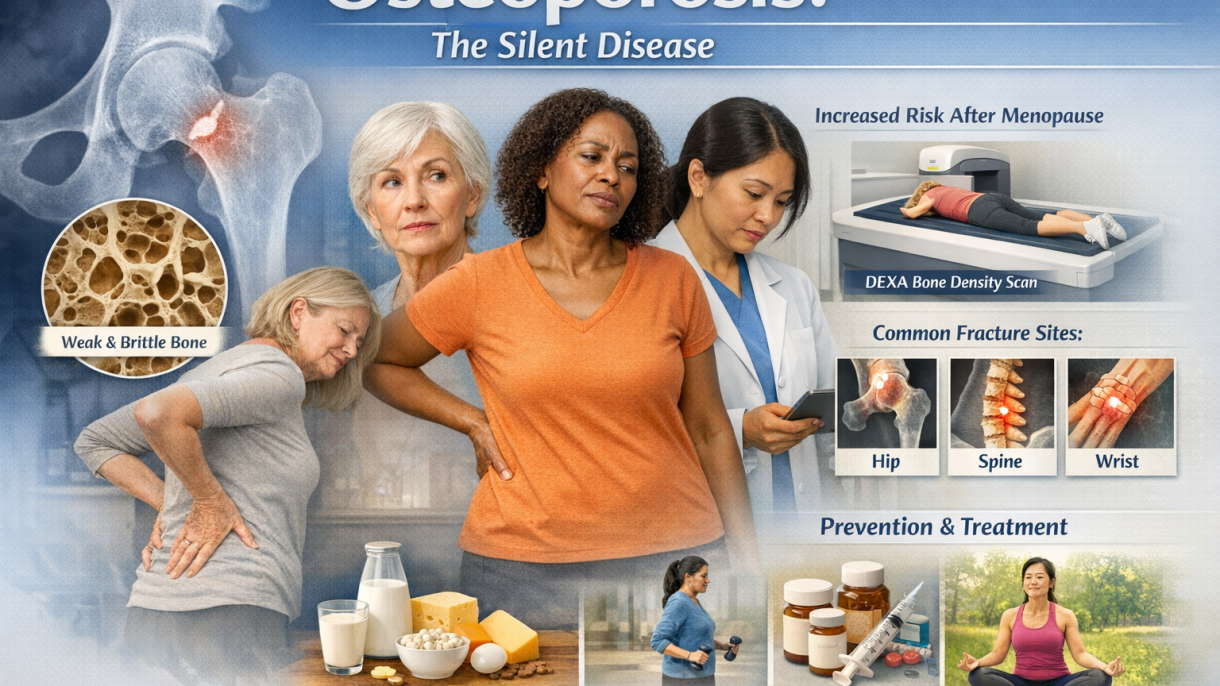

Osteoporosis is often called a “silent disease” because bone loss occurs gradually and without symptoms until a fracture happens. For many women, the risk of osteoporosis increases significantly during and after menopause, making awareness, prevention, and treatment essential for long-term health and independence.
What Is Osteoporosis?
Osteoporosis is a condition in which bones become weak, brittle, and more prone to fractures. Bone tissue is constantly being broken down and rebuilt, but after menopause, declining estrogen levels disrupt this balance. Estrogen plays a critical role in maintaining bone density. When levels drop, bone resorption outpaces bone formation, leading to progressive bone loss.
Common fracture sites include the hip, spine, and wrist. Even minor falls or in severe cases, routine movements can result in fractures that significantly affect mobility and quality of life.
Who Is at Risk?
While anyone can develop osteoporosis, certain factors increase risk:
- Menopause, especially early menopause
- Family history of osteoporosis or fractures
- Low body weight or small frame
- Inadequate calcium or vitamin D intake
- Sedentary lifestyle
- Smoking or excessive alcohol use
- Long-term use of corticosteroids
Because bone loss is silent, many women are unaware they have osteoporosis until a fracture occurs.
How Osteoporosis Is Diagnosed
The most common diagnostic test is a DEXA scan, which measures bone mineral density (BMD). This painless, low-radiation scan helps determine fracture risk and guides treatment decisions. Women over age 65 and younger postmenopausal women with risk factors are typically recommended for screening.
Recommended Treatment Options
The goal of osteoporosis treatment is to slow bone loss, strengthen bones, and reduce fracture risk. Treatment plans are individualized and may include a combination of the following:
1. Calcium and Vitamin D
Adequate calcium is essential for bone strength, while vitamin D helps the body absorb calcium. Many postmenopausal women require supplementation if dietary intake is insufficient. These nutrients are foundational but usually not sufficient alone for established osteoporosis.
2. Weight-Bearing and Resistance Exercise
Activities such as walking, stair climbing, strength training, and resistance exercises stimulate bone formation and improve balance, reducing fall risk.
3. Bisphosphonates
Medications such as alendronate and risedronate slow bone breakdown and are often first-line treatments. They have been shown to significantly reduce fracture risk when taken as directed.
4. Denosumab
This injectable medication reduces bone resorption and is often used for women who cannot tolerate bisphosphonates or who are at high fracture risk.
5. Selective Estrogen Receptor Modulators (SERMs)
SERMs mimic estrogen’s protective effects on bone without affecting other tissues. They may be appropriate for some postmenopausal women.
6. Hormone Therapy
Estrogen therapy can help maintain bone density in early menopause. It is typically considered when other menopausal symptoms are present and should be evaluated carefully for risks and benefits.
7. Anabolic (Bone-Building) Therapies
For severe osteoporosis, medications such as teriparatide stimulate new bone formation and are used in high-risk patients.
The Bottom Line
Osteoporosis is common, serious, and treatable. Early detection, lifestyle changes, and appropriate medical therapy can significantly reduce fracture risk and preserve mobility and independence. If you are postmenopausal or have risk factors, talk with your healthcare provider about bone density testing and the best treatment strategy for your long-term bone health.
Spread the word