

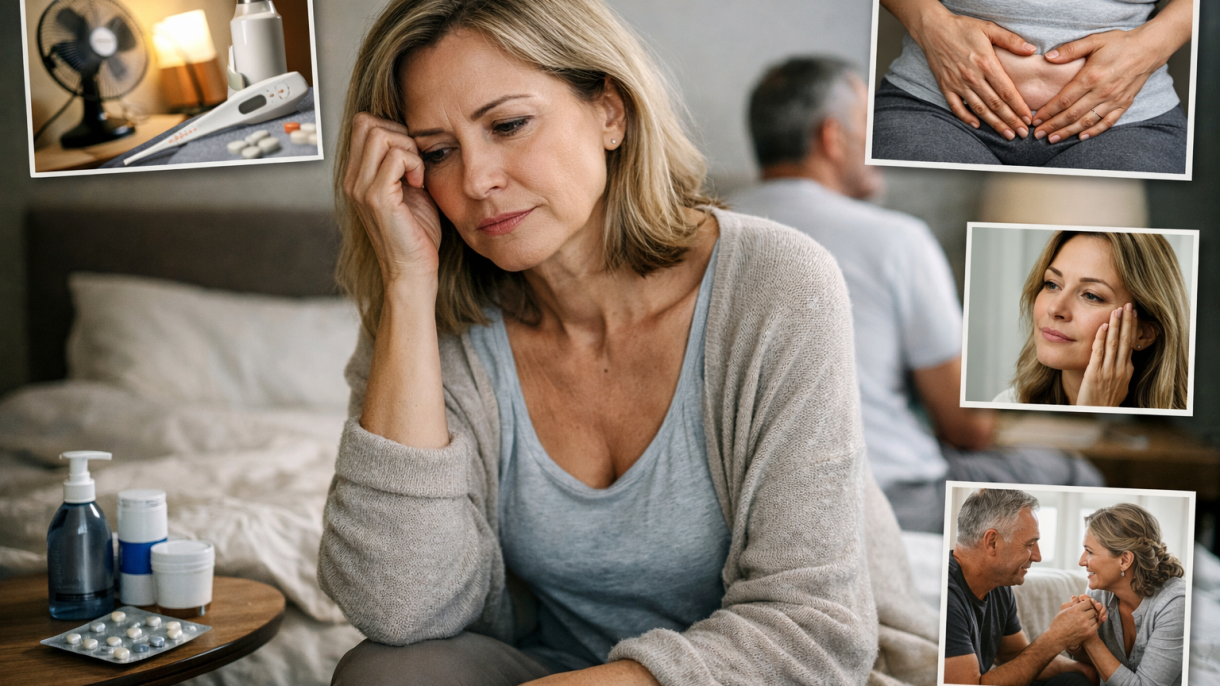

Low libido during menopause is one of the most common and least talked about changes women experience in midlife. While hot flashes and sleep issues tend to get the spotlight, shifts in sexual desire can feel far more personal and distressing. The truth is a decrease in libido during menopause is not a failure, a relationship problem, or a loss of femininity. It is a multifactorial physiological change with real, evidence-based solutions.
Why Libido Changes in Menopause
Sexual desire is influenced by hormones, brain chemistry, physical comfort, emotional well-being, and relationship context. During the menopausal transition, several biologic factors converge:
1. Estrogen decline
Estrogen supports vaginal blood flow, lubrication, and tissue elasticity. As levels fall, many women develop vaginal dryness, irritation, and pain with intercourse clinically termed genitourinary syndrome of menopause (GSM). When sex hurts, desire naturally decreases.
2. Testosterone changes
Women produce testosterone in smaller amounts than men, but it plays a significant role in sexual desire and arousal. Ovarian aging leads to reduced testosterone availability, which can blunt libido and sexual responsiveness.
3. Sleep and mood disruption
Night sweats, insomnia, anxiety, and depressive symptoms are common in menopause and strongly linked to reduced sexual interest. Fatigue alone can shut down desire.
4. Body and identity shifts
Weight redistribution, skin changes, and aging perceptions can affect sexual confidence. Many women report feeling less attractive or less connected to their sexual identity.
5. Life context factors
Midlife often coincides with caregiving, career stress, relationship changes, and health issues — all of which compete with sexual energy.
Treatment Options That Actually Help
Low libido in menopause is treatable, but effective care usually requires addressing both physical and psychological contributors.
1. Treat vaginal dryness and pain first
If intercourse is uncomfortable, restoring tissue health is foundational.
- Vaginal moisturizers (used regularly, not just during sex) improve hydration and elasticity
- Lubricants reduce friction during intimacy
- Low-dose vaginal estrogen (cream, tablet, or ring) directly reverses GSM changes with minimal systemic absorption
- Vaginal DHEA (Prasterone) improves tissue integrity and sexual comfort
When sex stops hurting, desire often begins to return.
2. Consider systemic hormone therapy
For symptomatic menopausal women, systemic estrogen therapy can improve overall well-being, sleep, and sexual comfort. In women with persistent low libido despite estrogen therapy, transdermal testosterone (used off-label in the U.S. but evidence-supported) can improve sexual desire and satisfaction when carefully monitored.
3. Address sleep, mood, and stress
Sexual desire does not exist in isolation from mental health.
- Cognitive behavioral therapy for insomnia (CBT-I)
- Treatment of anxiety or depression
- Stress reduction practices
- Adequate sleep restoration
Improving these domains often improves libido indirectly.
4. Relationship and communication support
Menopausal sexual changes frequently affect both partners. Counseling or sex therapy can help couples adapt to new patterns of intimacy, pacing, and expectations. Expanding definitions of intimacy beyond penetration reduces pressure and rebuilds positive sexual experiences.
5. Medications for hypoactive sexual desire disorder (HSDD)
For some women, clinically significant low libido persists despite addressing physical factors.
- Flibanserin (daily oral medication) acts on central neurotransmitters
- Bremelanotide (on-demand injectable) enhances sexual desire signaling
These are FDA-approved for premenopausal women but sometimes used off-label in menopause under specialist care.
A Reframing: Libido Evolves, It Doesn’t Disappear
One of the most important shifts in menopause is recognizing that spontaneous desire often transitions to responsive desire, meaning desire emerges after intimacy begins rather than before. This is normal physiology, not dysfunction.
Menopausal sexuality is less about urgency and more about comfort, connection, and intentionality. When physical symptoms are treated and expectations adjust, many women report deeply satisfying sexual lives well beyond midlife.
Low libido in menopause is common, biologically understandable, and treatable. With the right combination of medical support, self-understanding, and relational adaptation, sexual well-being can remain a vibrant part of healthy aging.