

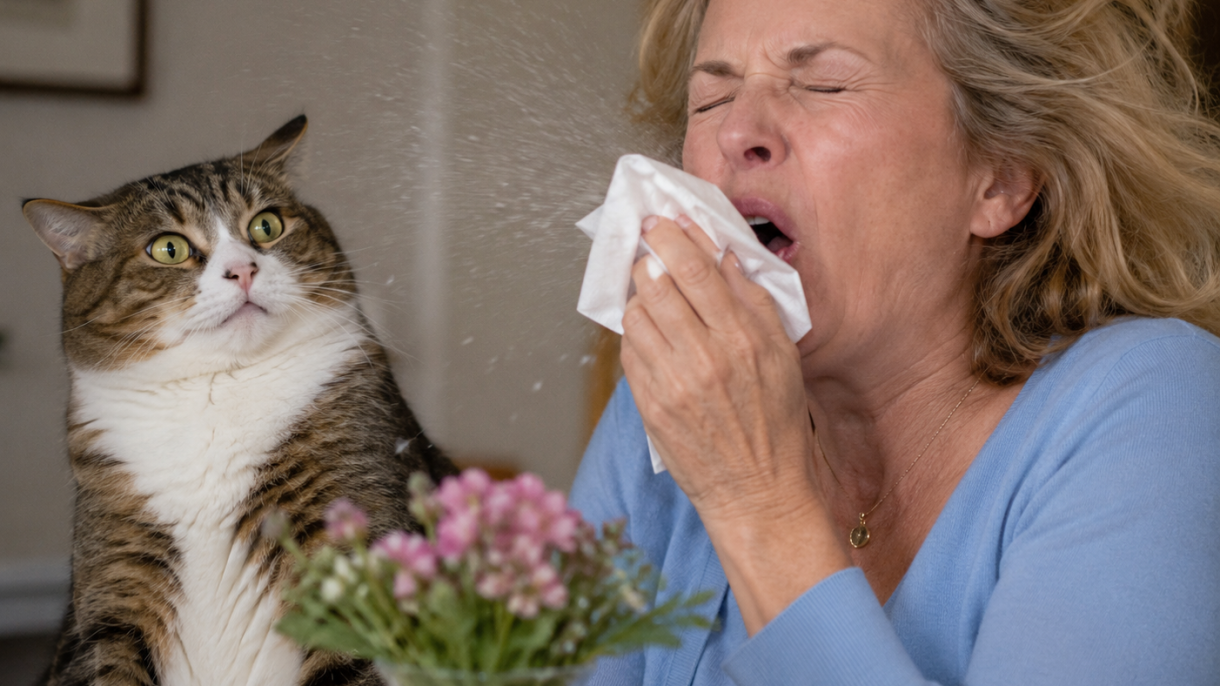

Sneezing more in menopause is one of those oddly specific symptoms that catches many women off guard. You expect hot flashes. You may even brace for sleep disruption. But suddenly sneezing multiple times a day sometimes in clusters, sometimes without an obvious trigger feels random and unexplained. It’s not in your head, and it’s not a coincidence. Hormonal shifts in menopause can directly affect the nose, sinuses, and upper airway.
The Estrogen–Nose Connection
Estrogen receptors are present throughout the respiratory mucosa, including the nasal passages. In reproductive years, estrogen helps maintain moisture, vascular stability, and mucosal thickness. As estrogen declines during menopause, several changes occur:
- Nasal tissues become drier and thinner
- Blood vessels become more reactive
- Mucus production changes
- Nerve endings become more sensitive
This combination can make the nose more prone to irritation and hypersensitive reflex responses in other words, sneezing.
Some experts refer to this as menopausal rhinitis, a nonallergic nasal inflammation driven by hormonal change rather than environmental allergens.
Why Sneezing Feels Worse in Midlife
Several menopausal factors amplify nasal reactivity:
1. Mucosal dryness
Just as vaginal tissues dry with low estrogen; nasal lining loses moisture. Dry mucosa is easily irritated by air, dust, temperature shifts, or fragrances.
2. Vasomotor instability
Hormonal fluctuations affect blood vessel dilation. The same mechanism behind hot flashes can trigger nasal congestion and reflex sneezing.
3. Heightened nerve sensitivity
Estrogen influences sensory nerve thresholds. Decline may lower the sneeze reflex threshold, meaning smaller stimuli trigger bigger responses.
4. Coexisting midlife allergies
Allergies can change with age. Some women develop new sensitivities in their 40s–50s, which overlap with hormonal rhinitis.
What Helps
The good news: menopausal sneezing is benign and manageable.
Hydrate nasal tissues
Saline nasal sprays or gels restore moisture and reduce irritation triggers.
Humidify your environment
Indoor heating and air conditioning worsen dryness. A bedside humidifier often helps with nighttime symptoms.
Avoid irritants
Perfumes, smoke, cleaning sprays, and cold dry air can provoke sneezing in sensitive mucosa.
Treat underlying allergies if present
If itching, watery eyes, or seasonal patterns exist, antihistamines or intranasal steroids may help.
Consider systemic hormone therapy
For women using menopausal hormone therapy, some report improvement in nasal dryness and reactivity, though this is not a primary treatment indication.
The Bottom Line
Frequent sneezing in menopause is another example of how estrogen affects tissues far beyond reproduction. The nose, like the skin, eyes, and genitourinary tract, is hormone responsive. As estrogen declines, mucosal dryness and sensitivity increase and sneezing follows.
It’s a small symptom with a hormonal explanation. And like many menopausal changes, once you know the mechanism, it feels a lot less mysterious.