

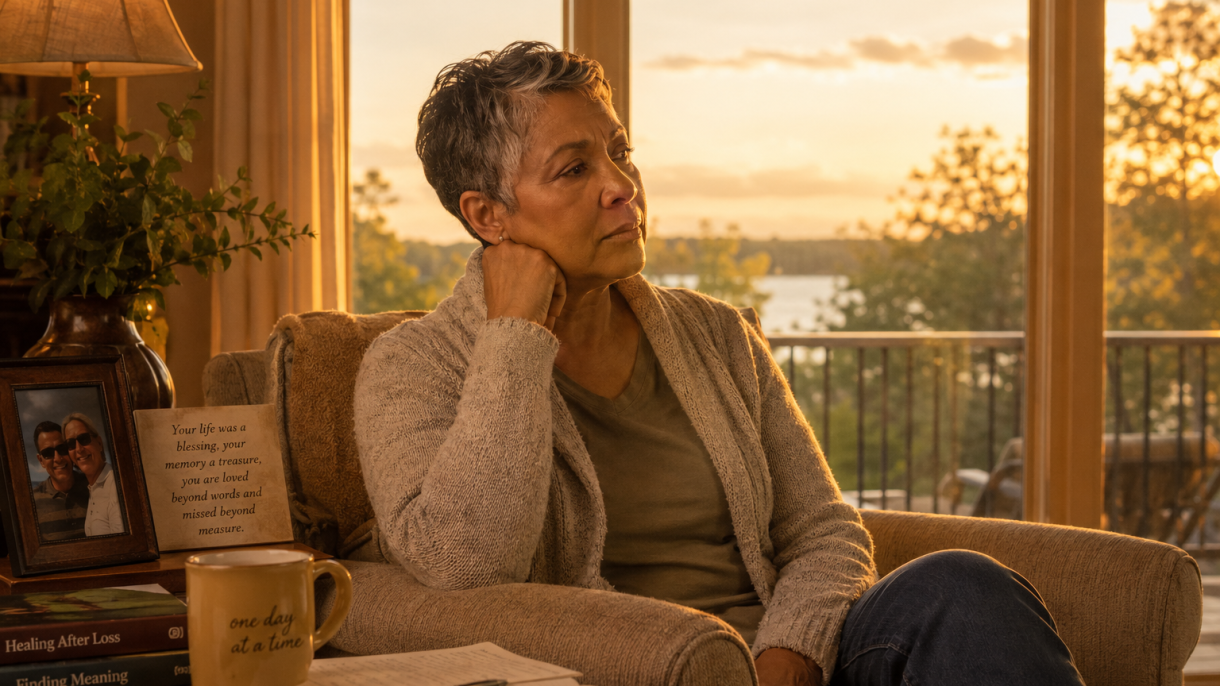

Losing a spouse in your 50s or 60s is a life-altering loss that arrives far too soon. This was the person you planned to grow old with the one who shared your daily routines, your history, your private language, and your future plans. When they are gone, the world can feel unfamiliar, quiet, and unbearably heavy.
Grief at this stage of life is complex. You are not only mourning the loss of your partner, but also the loss of the life you expected to live together.
The Shock of Sudden Change
Even when death follows illness or a long decline, nothing truly prepares you for the moment your spouse is no longer there. The practical realities, empty chairs, silent phones, sleeping alone can feel as painful as the emotional loss. Life keeps moving, but you may feel stuck in place, trying to understand how everything changed so completely.
Many people in midlife grief describe feeling unmoored. Your spouse was part of your identity. When they die, you may wonder who you are without them.
Grieving While Still “Too Young”
Losing a spouse in your 50s or 60s often comes with a unique sense of isolation. Friends may still be married, planning trips, talking about retirement together. You may feel out of step with the world, grieving a loss others your age have not yet experienced.
Well-meaning comments like “you’re still young” or “you’ll find happiness again” can feel dismissive. Grief does not operate on timelines or age expectations. There is no correct way to mourn, and there is no deadline for healing.
Allowing the Grief to Exist
Grief is not something to fix or rush through. It comes in waves sometimes gentle, sometimes overwhelming. You may feel sadness, anger, guilt, loneliness, relief, or numbness, often all in the same day.
Allow these emotions to exist without judgment. Suppressing grief does not make it disappear; it only postpones its expression. Giving yourself permission to feel is part of surviving this loss.
Learning to Live Again, Slowly
In time, the focus shifts from surviving each day to slowly rebuilding a life. This does not mean forgetting your spouse or “moving on.” It means learning how to carry love and loss together.
Small steps matter. Creating new routines, accepting help, and finding moments of peace no matter how brief are signs of healing, even if it doesn’t feel like it yet.
Support is essential. Grief counseling, support groups, or trusted friends can help you process the emotional weight of loss. You do not have to do this alone.
Holding Hope Without Pressure
Life after the death of a spouse will never look the same, but it can still hold meaning, connection, and even joy. Healing does not mean the pain disappears, it means it softens enough to allow space for living.
If you are grieving the loss of your spouse in your 50s or 60s, know this: your grief is valid, your love was real, and your future while different still matters. Take each day as it comes. Breathing again will happen, one moment at a time.
Note: If you are feeling overwhelmed and need additional support here are resources:
if you have thoughts of suicide or self-harm Call 988 for immediate help or Crisis Text Line (text HOME to 741-741)